
Listen to it on
Behind every small boat that crosses the Mediterranean lies much more than just water and kilometres: there are stories. Stories of fear, hope, loss and dreams. And there is also a question that challenges us as a society: what are we doing in the face of this reality?
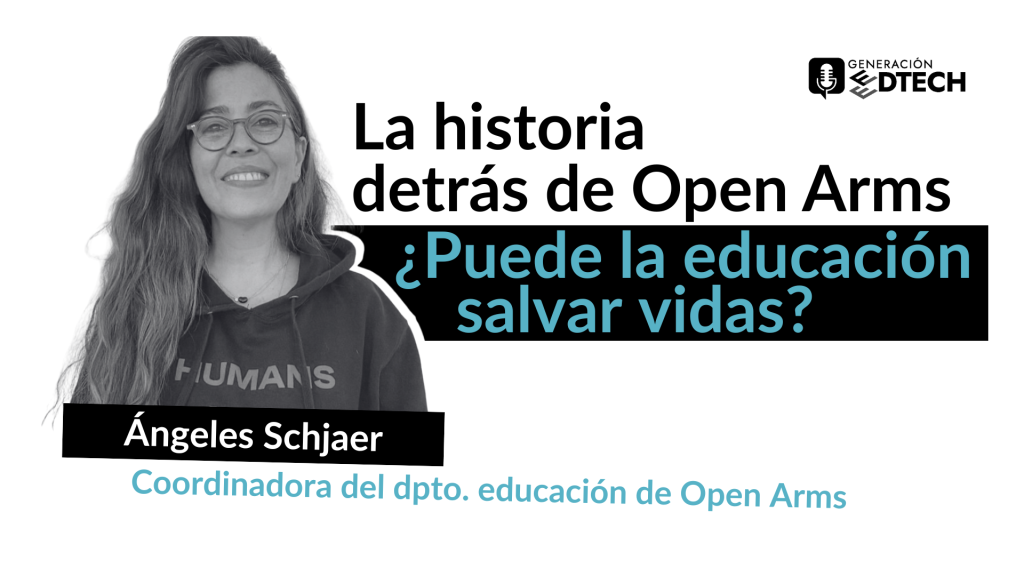
In this new episode of the podcast, we set off — both literally and symbolically — with Open Arms, an organisation that has turned the sea into a place of rescue, dignity and human rights. Through the testimony of Ángeles Schjaer, coordinator of the education department at Open Arms, we reflect on the links between immigration and social exclusion, and on how to reshape the narrative through education, the media and politics.
The sea as a border and as a classroom
“The Mediterranean is no longer a space that connects cultures, but one that reinforces inequalities,” notes Ángeles Schjaer in one of the most powerful moments of the conversation. She adds:
“When someone sets out to sea in a small boat without knowing how to swim, they are not seeking a better life: they are fleeing certain death.”
At Open Arms, they do more than just save lives. They also seek to raise awareness. That is why they have brought their experience into the education sector, with programmes designed to explain what is happening beyond Europe’s shores, and how this phenomenon is directly linked to our political, economic and social decisions.
From victims to protagonists: changing the narrative
One of the interview’s great strengths is the way it debunks stereotypes about migrants. They are not statistics, headlines or threats. They are people. People fleeing conflict, hunger or persecution, who, upon arrival, face new forms of social exclusion: legal barriers, xenophobia, job insecurity, invisibility.
As Ángeles explains:
“Exclusion doesn’t end when you set foot on dry land. Sometimes, that’s when it begins. Immigration law, the lack of opportunities, rejection… all of that is suffocating too.”.
That is why Open Arms is committed to transformative education as a tool for justice. Because changing the narrative from childhood and adolescence onwards is key to building a more inclusive and less fearful society.
Educate to welcome, not to point the finger
The conversation also raises critical questions about the role of the media and the political narratives that portray immigration as a threat. In response to this, the work of the Open Arms educational team focuses on empathy, rights and collective memory.
“We’re not just talking about human rights. We’re talking about common sense. About humanity,” Ángeles Schjaer emphasises firmly.
A journey that includes us all
The immigration and social exclusion These are not phenomena that are alien to us. They are part of our cities, our schools and our policies. And they will become even more so in the coming years. The question is whether we want to deal with them by building walls or by building bridges.