

Listen to it on
We live in an age where information flows at breakneck speed.
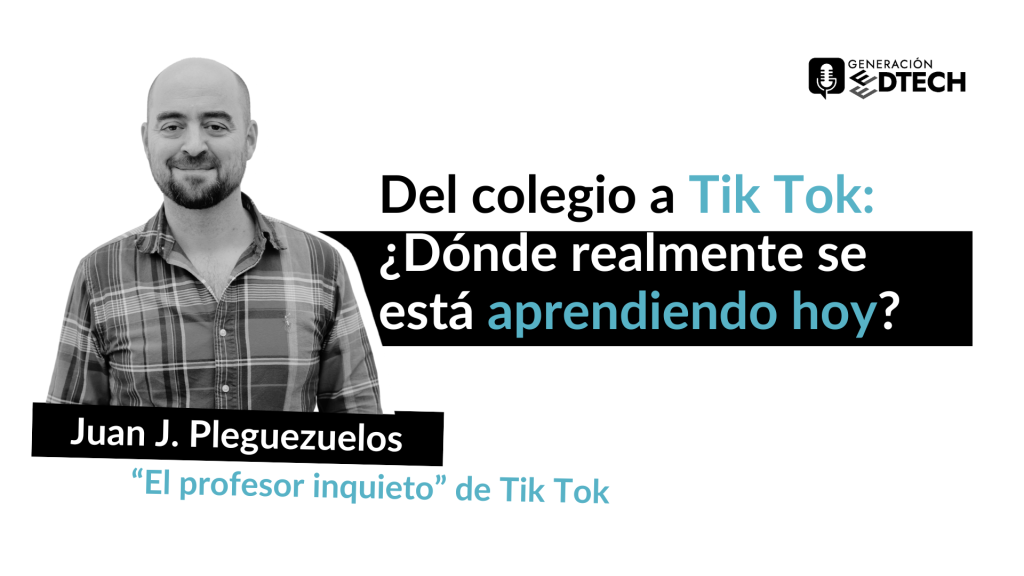
But can you really learn anything in the 15 seconds that the videos last? viral? In our latest interview, we spoke to Juan Jesús Pleguezuelos, better known as The restless teacher, on the present (and future) of digital education.
Who is the restless teacher?
A historian, teacher, content creator and a born communicator. With thousands of followers on TikTok, his podcast and YouTube, Juan Jesús has achieved something that seems impossible: getting young people to listen to talks about history… and want more.
In his own words:
“I come up with a thousand ideas every day. And I don’t do any more because I don’t have the time.”.
Education in the age of TikTok
During the interview, we addressed a key question: can a TikTok video compete with a traditional lesson?
His reply was clear:
“A TikTok isn’t a substitute for a lesson, but it can be the perfect complement. The challenge is to hold people’s attention in this age of distraction.”.
Juan Jesús reflects on how the way we learn has changed, how algorithms affect teaching, and what it means to be a teacher when the classroom is on a screen.
The real impact of digital content
As well as talking about productivity and creativity, he told us how he coped with the drop in view counts after years of success. But he also explained how he reconnected with his audience through perseverance, authenticity and analysis.
“I’m constantly looking for ways to make the most of my time… without compromising my health.”.
Teaching is not the same as educating
One of the most powerful messages from the ‘restless teacher’ is that simply teaching facts is not enough. We need to connect with students, inspire them and transform them.
“Whoever manages to reach their student without being caught out by the algorithm… that’s the key.”.
Conclusion
The interview with The restless teacher It is a masterclass in how to teach with passion, creativity and commitment in the 21st century. Because it is not about competing with social media, but about using it for what it was created for: communication.