

Listen to it on
In an increasingly fast-paced world, where metrics and results seem to reign supreme, there is one question that is resonating ever more strongly within organisations:
Can a smile change a company?
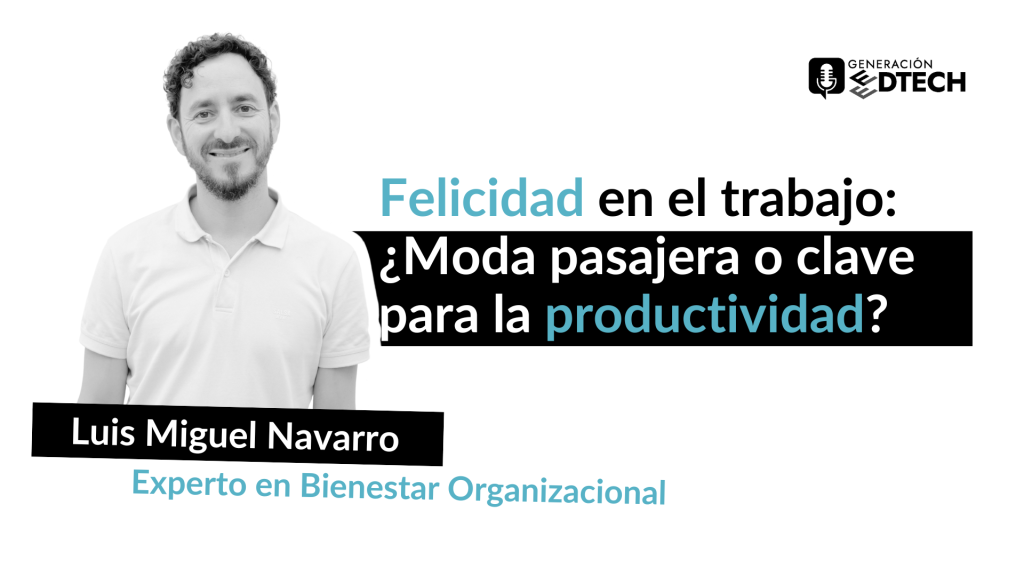
In our latest episode of EDTECH Generation, we spoke to Luis Miguel Navarro, an expert in organisational wellbeing and an advocate of a holistic approach to happiness at work. His argument is clear: happiness it’s not a luxury, is a business strategy.
The human face of productivity
A psychologist, trainer and enthusiast for human development, Luis Miguel Navarro has helped companies and teams to transform their internal culture, not through quick fixes, but through far-reaching strategies centred on wellbeing. For him, the happiness at work it is not a decorative concept, but rather a real driver of change and efficiency.
As he himself states:
“A genuine smile can boost the economy.”.
Happiness at work: much more than just a good atmosphere
During the interview, we debunked a lot of myths. Happiness at work isn’t about putting a table football table in the office or organising Friday afternoon tea parties.
“It’s not about telling you a joke, it’s not about taking everything as a joke. Happiness at work is a serious matter. You have to work on it from within.”.
Luis Miguel argues that well-being at work It cannot be improvised. In fact, it proposes creating multidisciplinary wellbeing teams that address five key dimensions: physical, emotional, social, spiritual and intellectual. Because happiness must be built on structure, leadership and purpose.
Why invest in happiness at work?
The happiness at work It improves productivity, reduces absenteeism and boosts employee engagement. Luis Miguel sums it up in a single sentence that invites us to rethink the fundamentals of corporate culture:
“It’s not just about feeling comfortable; it’s about working better.”.
And he adds: true well-being is not achieved through motivational quotes, but through consistent actions, active listening skills and a commitment that involves the whole organisation.
Towards a new, more humane form of leadership
In times of change, happiness at work emerges as a strategic necessity. Luis Miguel proposes a more people-centred business model, where people can to be, to grow and to contribute. An environment where working well and living well are not mutually exclusive.
“Happiness is possible, but it doesn’t happen automatically. It requires leadership, structure and purpose.”.
Conclusion
The interview with Luis Miguel Navarro is a masterclass in rethinking work from a more human and mindful perspective. Because perhaps new leadership isn’t measured solely by KPIs, but also by smiles.