
Listen to it on
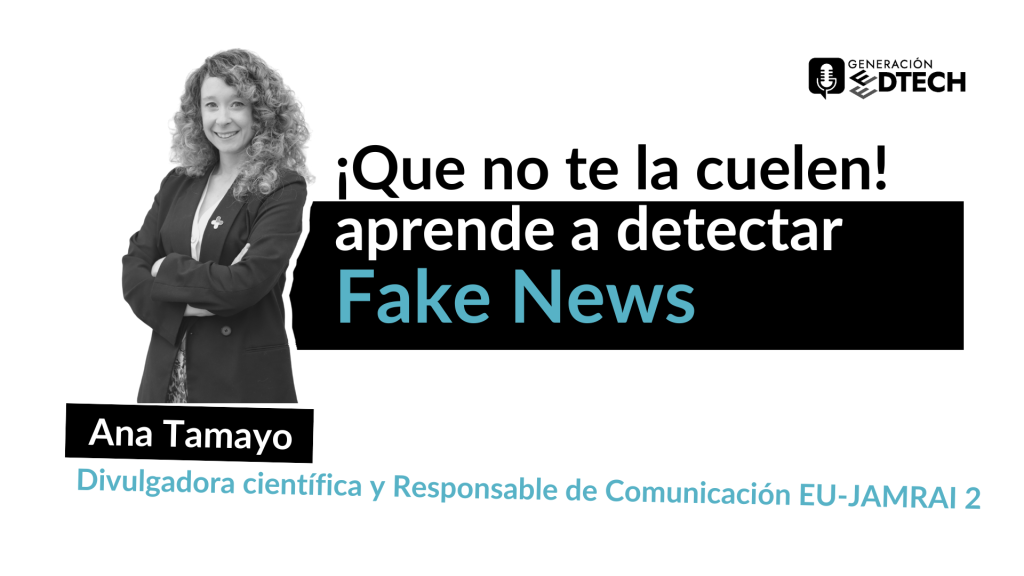
We live in an age where information flows at breakneck speed. However, not all information is reliable. In our latest interview, we had the opportunity to speak with Ana Tamayo, a journalist specialising in science communication, on a topic that is having an ever-greater impact on our society: fake news.
What is ‘fake news’?
During the talk, Ana defined ‘fake news’ as false or misleading information created to misinform or manipulate public opinion. Such news items can take many forms: from eye-catching headlines to articles that appear to be legitimate, but they all have one thing in common: they seek to mislead us.
The real impact of fake news
Ana Tamayo was unequivocal: «Fake news not only distorts our perception of reality, but can also have serious social, political and economic consequences.» From rigged elections, climate change, right up to mass panic, its impact can be devastating.
How to spot them: Practical tips from Ana Tamayo
One of the highlights of the interview was the series of tips Ana shared on how to spot fake news:
- Always check the source: Who is publishing the information? Is it a reputable media outlet or a dubious website?
- Check the date: Sometimes old news stories are shared as if they were current in order to cause alarm.
- Search for other media: If a news item appears in only one source, this may be cause for suspicion.
- Analysing language: An overuse of sensationalist adjectives or extreme emotions is usually a warning sign.
The role of education and critical thinking
Finally, Ana emphasised the importance of media literacy. Nurturing critical-thinking citizens who are able to identify reliable information is the most powerful antidote to disinformation.
Conclusion
The interview with Ana Tamayo taught us one thing very clearly: Faced with a tsunami of information, the best defence is critical thinking. Don’t be fooled: Learn how to spot fake news.