


In a working environment characterised by constant change, silent redundancies and emotional detachment, there is one concept that is emerging more strongly than ever:
organisational wellbeing.
It’s not just a fad. It’s a necessity. And, in many cases, the key to ensuring that businesses not only survive, but also thrive.
What exactly is organisational wellbeing?
Organisational wellbeing goes far beyond providing fruit on Mondays or access to a gym. It is a comprehensive strategy that aims to support the physical, emotional, social and professional balance of every individual within an organisation.
When wellbeing takes centre stage, everything changes:
-
- It improves productivity.
-
- It boosts commitment and motivation.
-
- Absenteeism and staff turnover are reduced.
-
- A healthier and more sustainable corporate culture is fostered.
Why are so many companies still reluctant to embrace it?
Organisational wellbeing is often seen as an expense rather than an investment. This is a mistake that can prove very costly.
According to numerous studies, organisations that actively promote the wellbeing of their teams have better financial results, lower staff turnover and greater capacity for innovation. The ROI of wellbeing is not just a myth, it is measurable.
But the key is to do it properly: with strategy, commitment and authenticity.
Happiness at work as a cornerstone of wellbeing
One of the key drivers of organisational wellbeing is, without a doubt, the happiness at work. But we are not talking about a superficial or feigned happiness, but rather a genuine, consistent happiness, in line with one’s values and experienced in everyday life.
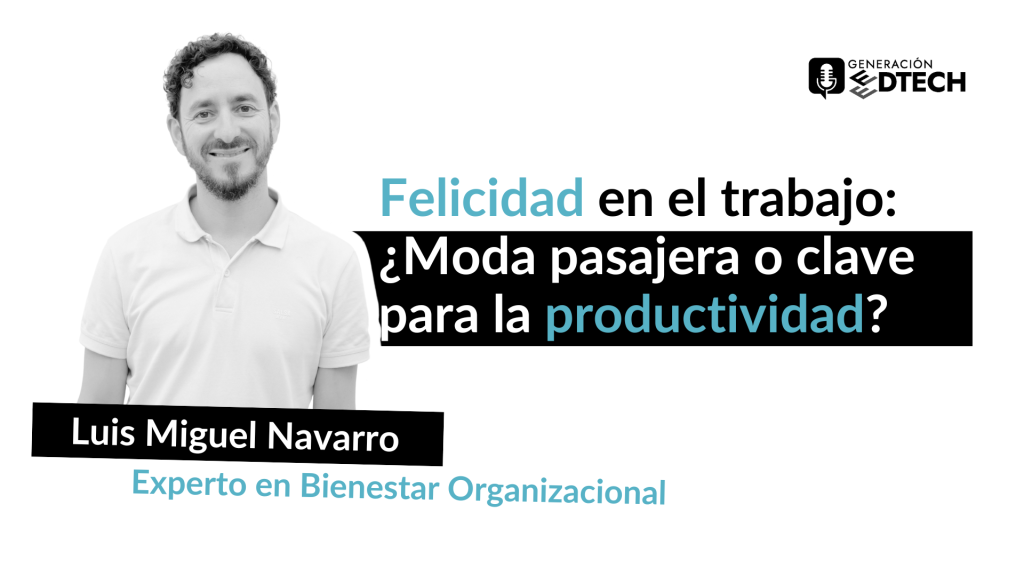
This is precisely what we discussed with Luis Miguel Navarro, an expert in organisational wellbeing, in this episode of EDTECH Generation on the happiness at work.
In the interview, Luis Miguel shares his insights on how to create working environments that support mental health, foster a sense of purpose and encourage meaningful relationships. All this is approached from a pragmatic and professional perspective on wellbeing in the corporate world.
New leadership begins with care
Organisational wellbeing cannot depend on human resources as an isolated department. It requires leadership commitment, consistent values and a long-term perspective.
Because companies that look after their staff retain them.
Those who listen grow.
And those who are committed to wellbeing, are leading the change.