
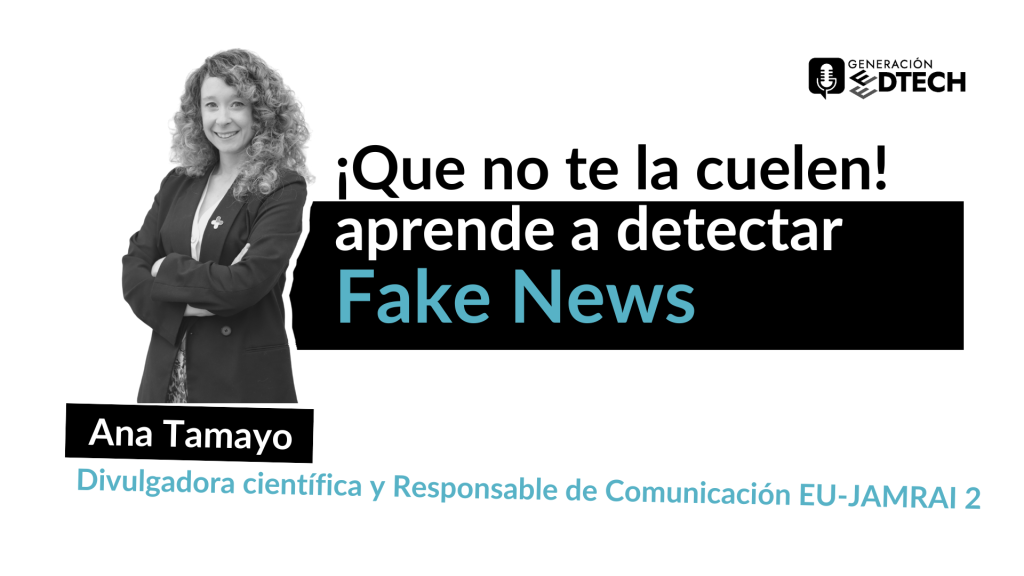
In the interview with Ana Tamayo We’ve been discussing how fake news affects us on a daily basis. Now, let’s take a closer look: what exactly is fake news? Why is it so widespread in the digital age? And, most importantly, how can we protect ourselves?
The Origins of Fake News
Although fake news is now a common feature of our digital lives, it is not a new phenomenon. Rumours and the manipulation of information existed even in ancient times. What has changed is speed and range which spread thanks to the internet and social media. These being the minors, those most exposed to this content.
Why do they work?
- They appeal to people’s emotions: Anger, fear, surprise… Emotions cloud our rational judgement.
- Confirming preconceptions: We tend to believe more readily those things that reinforce what we already think.
- Lack of verification: The frenetic pace at which we consume information leads us to share content without checking it first.
The Consequences of Fake News
As Ana Tamayo explained, fake news is not harmless. It can:
- Damaging reputations.
- To influence elections and political decisions.
- To foster widespread mistrust of the media.
- Spreading dangerous conspiracy theories.
How to combat misinformation
As well as the practical advice Ana gave us (checking sources, verifying dates, looking for cross-references), there are other methods:
- Promoting media literacy from an early age.
- Supporting reputable media organisations who adhere to the ethical standards of journalism.
- Using tools for fact-checking such as Maldita.es, Newtral or Snopes.
Conclusion
The fake news are one of the great challenges of our time. Combating them is not just the task of journalists: Every internet user has a part to play in slowing its spread. The key lies in education, critical thinking and digital responsibility.