

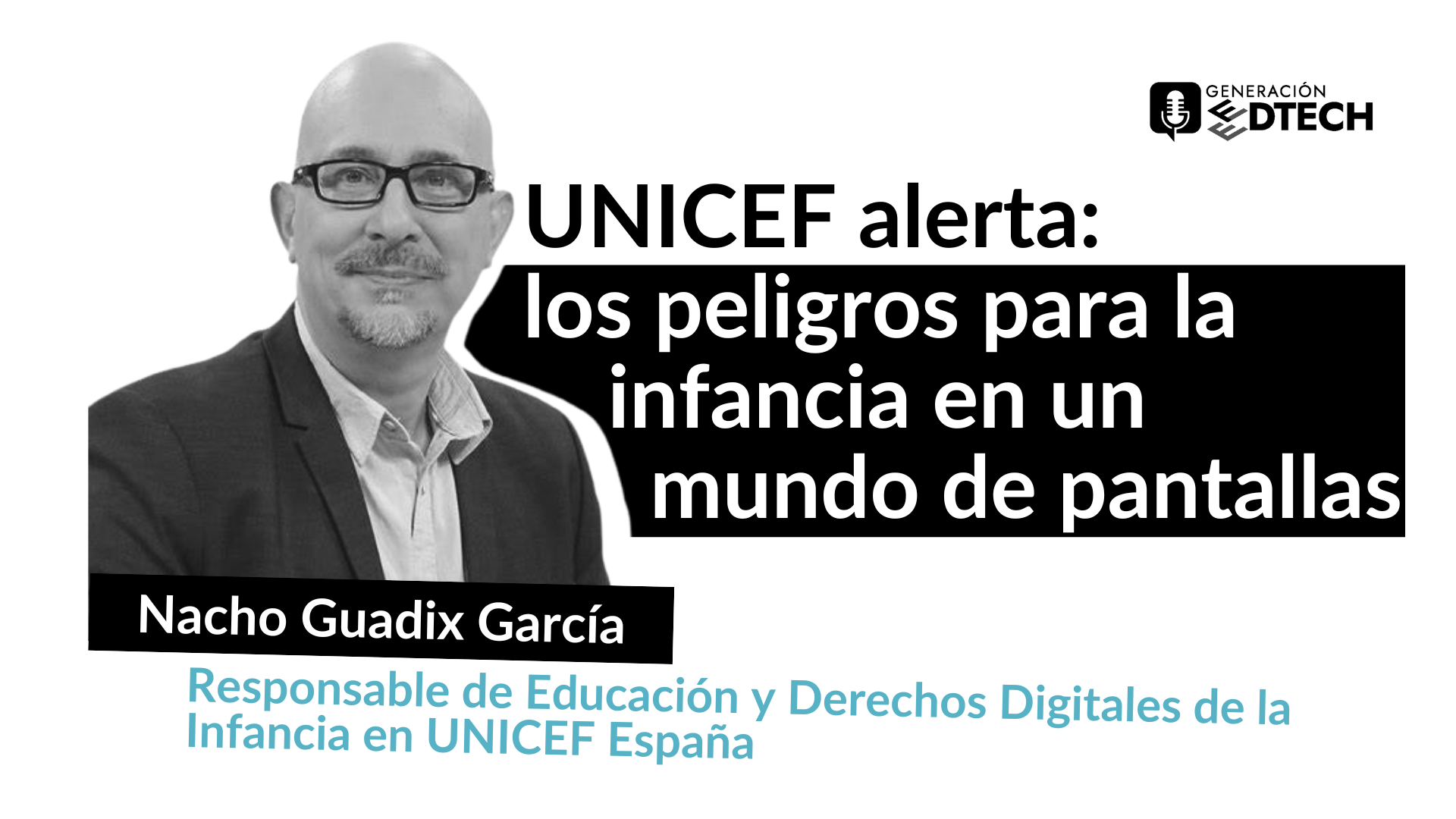
In the sixth episode of Generation EdTech, titled. «The challenges of a happy childhood in the age of hyperconnection».We are joined by Nacho Guadix García, head of Education and Children’s Digital Rights at UNICEF Spain. Guadix, drawing on his vast experience, leads a crucial area: ensuring that children’s rights are protected in the digital environment and promoting inclusive and equitable education that prepares future generations.
UNICEF, as one of the most widely recognised agencies of the United Nations, works tirelessly to defend the rights of children around the world. In this episode, topics ranging from the impact of misinformation to the risks associated with social media and hyperconnectivity on children were discussed.
«There are situations that go beyond the frameworks we have established to resolve them.»
Guadix highlighted an important point regarding the digital environment: «Just because it is modern doesn’t mean that everything is positive,» highlighting cyberbullying and the ethical challenges involved in extending human rights to the digital realm. Nacho Guadix also raises the question of how to balance the opportunities offered by technology with the associated risks, and the urgent need to draw «red lines» on issues such as misinformation, a problem that Guadix considers particularly alarming.
Other key points raised by our guest included the dangers of social media, ranging from inappropriate content to contact with strangers. According to Nacho Guadix, 60% of teenagers accept friend requests from strangers on social media, and 20% have met up with them – behaviour patterns that are considered harmful and inappropriate.
«Filling educational spaces with technological equipment, without any pedagogical work behind it, is not digital education.»
The head of Education and Children’s Digital Rights also commented on the impact of artificial intelligence on child development and its potential to either exacerbate risks or improve educational processes, depending on how it is used.
«This is happening very quickly,» said Guadix, referring to the accelerating impact of new technologies. «There can be no development that does not put people at the centre.»
The episode also highlights the need for a consistent and collaborative approach to education, involving the whole educational community. According to Guadix, «Education, when it is consistent, is coherent,» a statement that emphasises the key role of teaching and collaboration in ensuring that no one is left behind in this technological revolution.
This dialogue is a crucial step towards collective reflection on how to balance technological development with the protection of children’s rights in an increasingly digital world. You can listen to the full episode on the Generation EdTech platforms.