

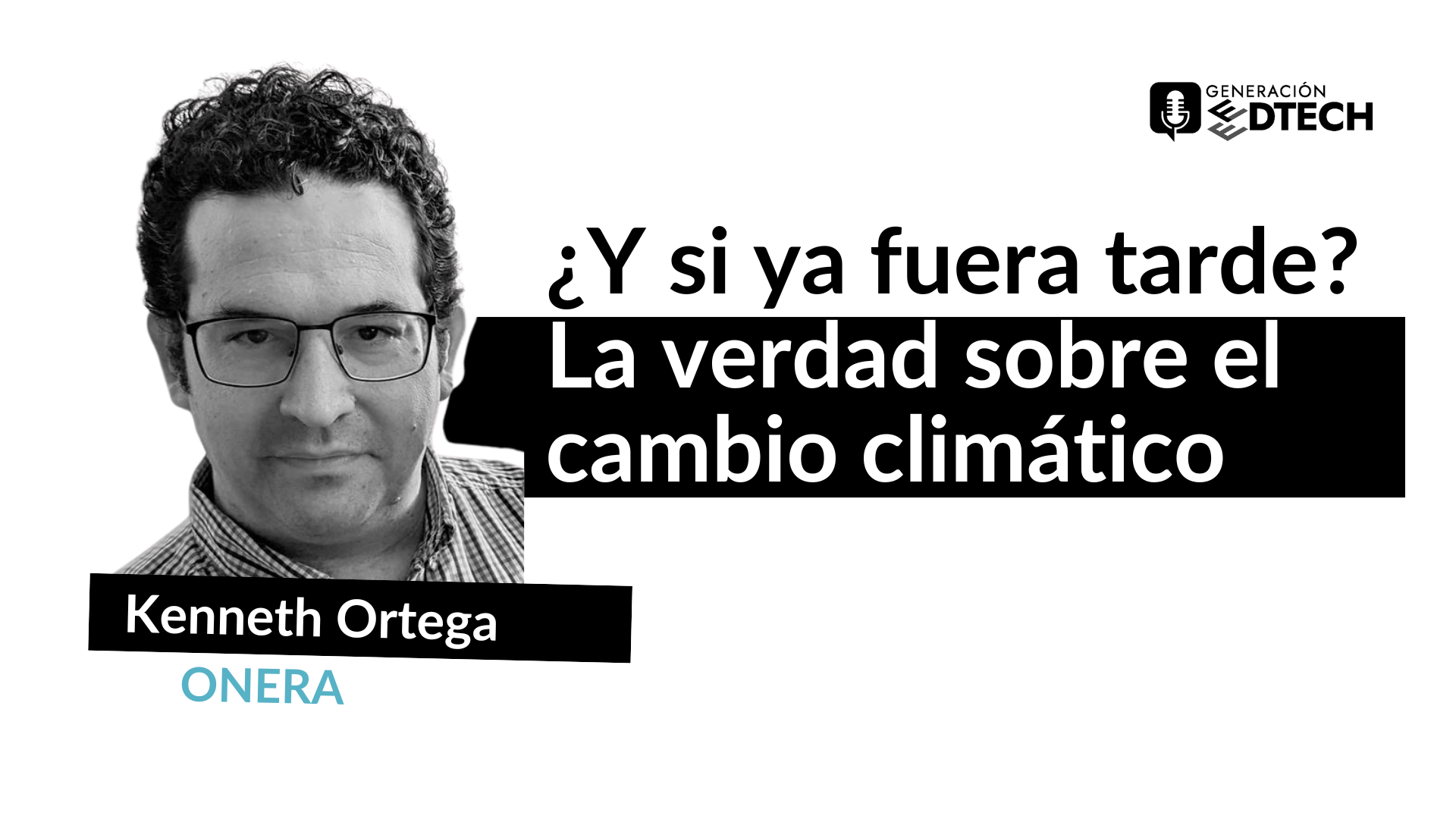
Sustainability is one of the great challenges of our time, and few issues are as urgent as the decarbonisation. In EdTech Generation, we are pleased to welcome Ismael Kenneth from ONERA, an expert in sustainability and environmental communicator, to explore this complex process which aims to minimise carbon dioxide (CO₂) emissions and mitigate climate change. Although there is already talk of a «climate emergency», the truth is that the future depends on our ability to radically transform the current energy model.
What is decarbonisation and why is it crucial?
The decarbonisation is the process by which the amount of carbon emitted into the atmosphere is reduced, particularly in sectors such as industry, transport and energy. During the interview in EdTech Generation, Ismael Kenneth emphasised that reducing emissions involves not only technological change, but also a profound transformation in social and economic habits.
“We cannot talk about sustainability without addressing the challenge of decarbonisation. It is the first step towards a habitable planet.” – Ismael Kenneth
Global warming is already affecting millions of people around the world, with extreme weather events and changes to ecosystems. The scientific community agrees that achieving carbon neutrality is essential to prevent global temperatures from rising by more than 1.5 °C above pre-industrial levels.
The challenge of decarbonisation: Are we ready?
The transition to a low-carbon economy is not straightforward. During the talk at EdTech Generation, Ismael Kenneth analysed some of the obstacles society faces in achieving this objective:
- Dependence on fossil fuels: Although renewable energy is booming, oil, gas and coal remain essential in many sectors.
- Lack of sustainable infrastructure: The transition to electric transport or clean energy requires significant investment.
- Public awareness: Although there is more information available, there is still a lack of genuine commitment to reducing one’s personal carbon footprint.
“Decarbonisation is not just a technological challenge; it is a shift in collective mindset.” – Ismael Kenneth
Workable solutions: From commitment to action
For decarbonisation to become a reality, effective public policies, technological innovation and, above all, a change in consumption habits are needed. From EdTech Generation, Ismael Kenneth highlights some strategies that are already underway:
- Energy transition: To promote the use of renewable energy and phase out thermal power stations.
- Sustainable mobility: Promoting public transport and electric vehicles.
- Environmental education: To raise public awareness of the impact of their everyday actions.
Conclusion: Decarbonisation is an inevitable path
To talk about sustainability Failing to tackle decarbonisation is like trying to put out a fire without cutting off its source. If we truly want to leave a habitable planet for future generations, the time to act is now. Technology, education and collective commitment are the keys to achieving a more environmentally friendly way of life.