

Distance learning has been touted for years as the model of the future: flexible, accessible and technology-driven. But there is one question that few institutions have asked themselves thoroughly: do students arrive prepared to learn in this environment? Do they have the digital skills and soft skills that this model requires?
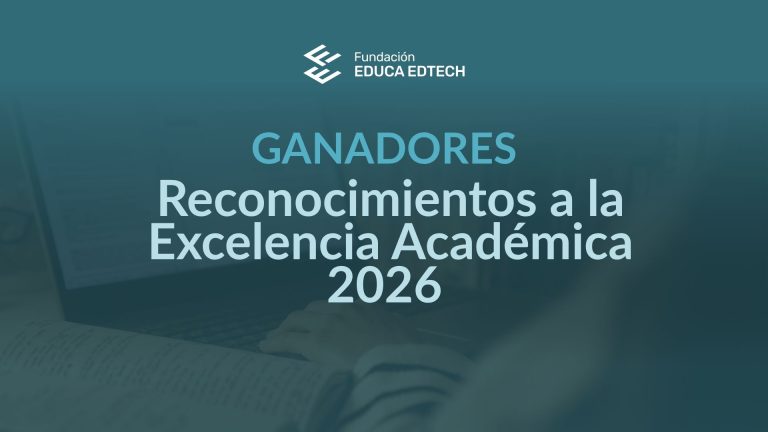
Silvia Maria Mendoza Salgado, who was recognised in the Education and Learning Sciences category at the EDUCA EDTECH Foundation’s 2026 Academic Excellence Awards, decided to answer that question with data.
The starting point
His doctoral thesis, carried out at the Autonomous University of Baja California Sur, analysed the profile of new students entering distance learning programmes. The aim was clear: to identify the extent to which these students align with the characteristics defined by the Education 4.0 Model, a paradigm centred on autonomy, collaboration, problem-solving and the strategic use of emerging technologies.
To this end, he designed his own 40-item Likert-scale questionnaire, structured around nine dimensions: information seeking and management, communication and collaboration, digital content creation, security, problem-solving, attitude towards technology, critical thinking, collaborative working and autonomous learning. The sample included first-year students on degree programmes in Law and Legal Studies, Marketing, Communication and Multimedia Production.
What the data revealed
The results paint a complex and honest picture. Scores were high across most of the dimensions assessed, particularly in terms of independent learning and problem-solving. This is good news for an educational model that demands precisely that.
However, analysis of the educational profile showed that a significant proportion of students still display characteristics associated with traditional models, alongside features typical of Education 3.0 and 4.0. In other words: students arrive with certain skills, but not always with the full set of skills required by the virtual learning environment.
The most significant finding of the study is what the correlational and predictive analyses revealed: digital competences and soft skills significantly explain the shift towards Education 4.0 profiles. And amongst these, three stand out in particular as predictors: autonomous learning, attitude towards the use of technology, and collaborative working.
A roadmap for institutions
Silvia Maria’s conclusions go beyond mere diagnosis. They point directly to action: the transition to Education 4.0 requires institutional processes aimed at the comprehensive development of digital skills, soft skills and student-centred teaching strategies.
To put it another way, simply digitising the classroom is not enough. We need to prepare those who are going to learn in it.
At a time when artificial intelligence is redefining what it means to study and work, this kind of research is more necessary than ever. Knowing where we stand is the first step towards knowing where we need to go.